

The Level 18 Fund decreased by -3.5 per cent net of fees for the month.
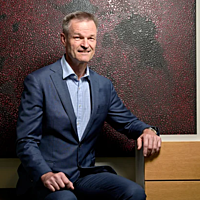
Firmus, AirTrunk and NEXTDC have all hit funding hurdles. Matthew Kidman While the AI world has been typified by the hyperscalers, neoclouds and models themselves spending astronomical amounts of money, under the surface there have been a whole host of companies reaping the rewards. In terms of the Australian AI trade, a big chunk of those companies are small cap data centre contractors. So, where does a small cap investor that rode the wave go when the tide turns? For Centennial Asset Management’s Matthew Kidman the answer is to go more defensive. “We’ve had a pretty big run in stocks like SKS Technologies (ASX: SKS) , Southern Cross (ASX: SXE) , Genusplus (ASX: GNP) , and more recently Megaport (ASX: MP1) ,” Kidman says. “We’ve cycled through those now and we’re in this defensive position, holding a bit more cash and gone a bit bigger in market cap.” He adds that investors also need to be cognisant of the bigger picture, particularly what's happening with bond yields and global capex impacting the AI trade. “What you've found is the market has started to cycle out of some of those stocks that are reliant on the capex cycle, but it’s not ready to go into the interest rate sensitive groups, because rates are still going up.” Where this leaves investors is stuck in a middle ground where defensive stocks - or what people perceive as defensive - have come to the fore. “At the small end of the market, unfortunately, there are not a lot of defensive stocks. They've all got some exposure to cycles,” Kidman says. “For the moment, we've taken more cash. We've gone a bit more defensive, where we're looking at this capex cycle and asking whether it's the end of the growth in it.” It's a financing problem, not a demand problem In much the same way that these stocks were bolstered by the broader AI theme driving spending, it’s not really the businesses themselves that are causing investor concern. Reporting season produced no “hand grenades”, Kidman says. “Most of them earned well, but the market is a bit nervous about it.” What investors need to understand, he adds, is that these businesses have seen their earnings jump enormously in a relatively short period of time but that the level of investment isn’t guaranteed to continue. “Is the AI spend disappearing? I don't think so. Is it slowing? Definitely.” “These companies, and I'm talking Southern Cross and SKS here in particular, got re-rated on much bigger earnings. So we're looking at the outer years, all of a sudden, is there as much work? Maybe not.” When stocks are trading on multiples above 20 times earnings, “the outer years count”. The real problem, he says, are supply constraints and financing. His concern is how data centres get paid for. Firmus failed to raise around $7 billion in its float, AirTrunk pulled a smaller raise in Singapore, and NextDC has been hit by delays and downgrades at one of its big sites. “If you can’t get your equity, you can't get your debt, and all of a sudden their data centres aren't funded.” NEXTDC shows how this plays out. One of its big data centres fell through because they couldn’t secure an energy contract, leading to delays and downgrades. “So what does NEXTDC do now? It's got a very geared balance sheet because it's been building these data centres, but the equity price is down. Every bank, every lender will want equity to be raised, and they'll be hesitant to raise it. Funding gets tight.” What Kidman is buying Just because Centennial is moving more into cash and getting more defensive, that doesn’t mean it’s given up on picking stocks, with Kidman outlining three new investments in The Level 18 Fund that he believes are positioned to perform. CSL ( ASX: CSL ) The former market darling has come storming back to life over the last six months and its inclusion in the fund is emblematic of Centennial’s shift to include large cap names with a defensive angle. “What we've seen globally is that healthcare has had a bit of a renaissance. Everyone's being defensive, and healthcare is a go-to place. CSL is benefiting from that. It's a global company, and its earnings are probably not going to fall off the edge of a cliff here,” Kidman says. “They've kind of reset, so it's a safe place to hold for the moment. Do I think we hold it for five years? No, a lot of its growth is done. It's mature, but it's not a bad holding spot at the moment.” Bapcor ( ASX: BAP ) Bapcor is a turnaround, with its third or fourth change of management in recent years and a large wholesale car parts business. Even though it is a small cap business, Kidman says it still has scale and revenue, it’s just lost its profitability. “What encourages me, even though that smaller retail part is struggling because of the higher interest rate market, is that Bapcor still has quite a large revenue base. If it can rebuild even half the margin it had before, it's worth a lot more than it is today. “We've owned it for a little while now, a few months, and it's been one of our better performing stocks. We've got a reasonable position, but it's at that small-to-medium end.” He adds a warning: “Turnarounds are harder than what everyone thinks, so be careful with your turnarounds. But on this occasion we think management seems to be doing the right thing. They've brought people back in who are industry players and understand the industry, which encourages us a little bit.” The Koala Company ( ASX: KOA ) Koala is a global growth story that many first dismissed as “the next Temple & Webster”, but Kidman says that a closer look reveals far higher margins, a narrower range and the US launch was profitable straight away. “Now they've gone to the UK and they intend to go to Canada. It’s a high margin, and they've been able to go into these geographies without spending much money and getting results pretty quickly,” Kidman says. “The stock re-rated and now it's not as cheap. When we first saw it, it was on single-digit multiples, maybe 10, and growing at 30%. Perfect, we'll take that every day of the week … Now the multiple's in the higher teens, but it could probably still grow 20 to 30% for a while.”
Post the close of the September quarter 2026, we have recorded a short video presentation regarding the Level 18 Fund’s performance during the period. We have also provided additional details regarding the Fund’s portfolio positioning and our outlook for the equity market in the future.
The Level 18 Fund increased by 2.9 per cent net of fees for the month.
The Level 18 Fund increased by +0.4 per cent net of fees for the month.
The Level 18 Fund decreased by -6.8 per cent net of fees for the month.
Post the end of FY26, we have recorded a short video presentation regarding the Level 18 Fund’s performance during the period. We have also provided additional details regarding the Fund’s portfolio positioning and our outlook for the equity market in the future. We have also provided some additional details regarding our plans to limited FUM growth and to close the Fund at $300M in August 2026.
The Level 18 Fund increased by +4.0 per cent net of fees for the month.
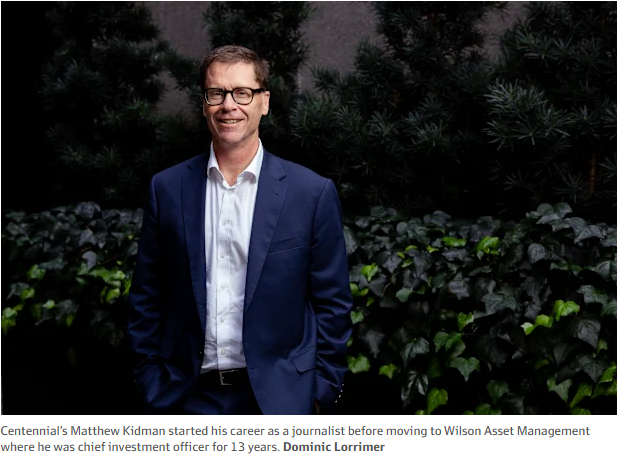
Matthew Kidman talks about the outlook for markets and the investment opportunities in the current market. Kidman says, “we’re entering a phase of the market where liquidity is going to be paramount. As an investor, you do not want to be in illiquid assets under any circumstances. We’re in the late stages of a bull market, and investor sentiment is approaching fever pitch” Investing in this phase of the market cycle can be incredibly rewarding, it is fraught with volatility and "strange behaviour." Kidman's message is simple: Remain nimble. In this interview, Kidman expands on his bull market thesis, why he is happy holding his winners (for now) and where he sees the next opportunity.
As we approach the end of FY26, we have recorded a short video presentation designed to give unit holders an update regarding our outlook for equities over the next year. We have also provided some additional details regarding our plans to limited FUM growth and to close the Fund at $300M in August 2026.